Upon entering the cradle of the Inca, one gains not only 3800 meters above sea level, but also altitude sickness. To reach the treks’ starting points, there were usually a couple of hours on the road first. While driving through the highlands, your mind would start to synchronise with the colour palettes of distant mountain ranges.
Passing numerous remote villages built from adobe, as they appeared and
disappeared again into the red mountains. Rural lives of farmers and neglected
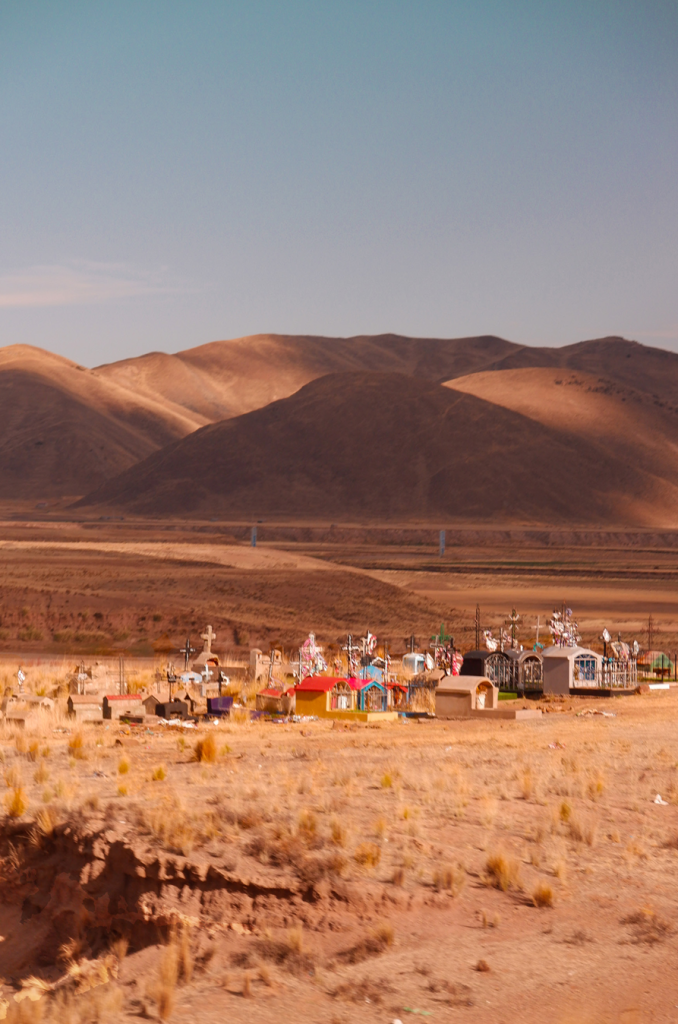
patios, but saturated with colours. Filled with a rainbow of corn drying next to the hanging shoes. Guitars on the walls, chickens, toys. Vast landscapes and cemeteries scattered along the road; small plots of land full of colourful crosses and tiny houses built for the souls of deceased loved ones, so they have a home and don’t wander.
Droplets of the guide’s word enter and exit my mind freely as we spend hours on the bus: ‘’It has been discovered only recently, with new technologies and DNA scans, that Incas also practised human sacrifice. Because you need to sacrifice something that is precious to you and something that is pure, innocent. We, adults, are already spoiled, dirty – with everything we have done. So they sacrificed their kids, sent them to the mountains of Patagonia.’’
Unfinished houses, unfinished towns, unfinished history. Inca graffiti next
to the political parties’ graffiti. Pigs, sheep, and cows are blocking the traffic. Sheet metal and brick prevail as building materials, creating myriad stitching inventions.
Young couples expressing affection publicly. Dark workshops, dirty playgrounds,
meat and roses. Dogs waiting to be petted. Honking horns. Backdrops of velvety
golden hills shimmering in the low light of approaching sunset.
‘’It’s an ongoing process, learning about the Incas’ culture and what it means. It’s a lot of speculation. When colonisation happened, they only destroyed and took the wealth; they didn’t care to learn or preserve the culture they encountered. So there is no proofs.’’
Activity multiplies when approaching bigger settlements. Chalky red soil, red
bricks, red roads; a grid of parallel, repetitive streets, each of them seemingly interminable and only disappearing in clouds of red dust.
‘’So, what do you value? Family, Mother? Yes, mother. But I value Mother Earth the most. Pachamama. It will take back all of us. With open arms. It gives everything, and it takes everything. So the first glass is always for her,’’ he said and poured his drink on the ground.
(excerpt from Sacred and Mundane)